
Bitcoin Beach: How a Small Surf Town Changed El Salvador
There are not many small beach towns that become part of the history of a country, and even fewer that become known around the world for something as unexpected as a new form of money. Yet that is what happened in El Zonte.
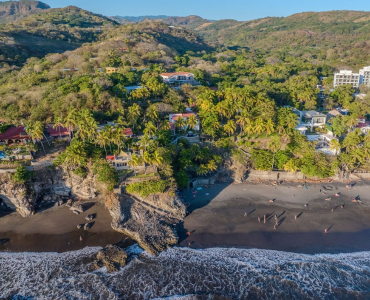
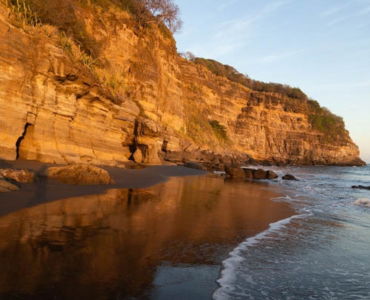
Today, El Zonte is best understood as a surf town. The Pacific is still the center of life here, with surfers heading down to the water in the morning, fishermen working along the coast, and a growing collection of restaurants, cafés and places to stay scattered through the hills behind the beach. It has changed considerably over the years, but it still feels like a community rather than a resort built entirely around tourism.
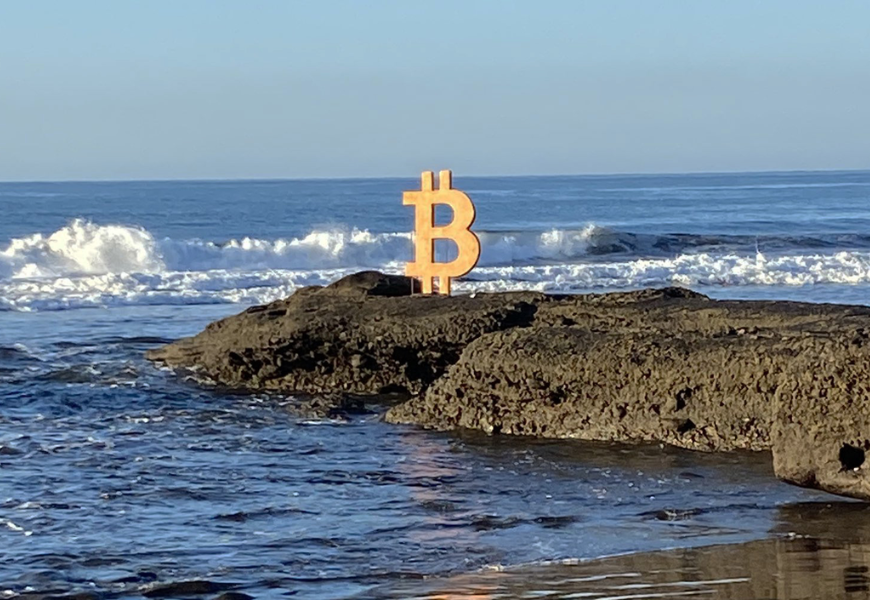
For a few years, however, the name most people outside El Salvador knew was not El Zonte. It was Bitcoin Beach.
The story behind that name is one of the more unusual chapters in recent Salvadoran history. It began with community projects that had nothing to do with cryptocurrency, an anonymous Bitcoin donation in 2019, and a group of local people experimenting with whether Bitcoin could actually function as money within a small community. What happened next attracted international attention, helped inspire El Salvador’s national Bitcoin policy, and changed the way people around the world thought about this otherwise relatively quiet stretch of coastline.
Before Bitcoin, There Was a Community
To understand Bitcoin Beach, it helps to start with what El Zonte was like before Bitcoin arrived, because the cryptocurrency did not create the community’s social projects or its interest in creating more opportunities for local young people.
Community initiatives were already underway, including programs focused on education, youth development and employment. Mike Peterson, who had made El Zonte his home, became involved in this work alongside local community members. The aim was practical: give young people more opportunities, strengthen the community and create ways for money and skills to circulate locally.
That existing foundation would become important later, because when Bitcoin appeared, it was not introduced into an empty space. There were already relationships between local families, businesses and community organizations, and there were people who understood the challenges of trying to create economic opportunities in a small coastal community.
Then, in 2019, an anonymous donor offered a very different kind of opportunity.
The Donation That Started Bitcoin Beach
The donation was more than $100,000 worth of Bitcoin, and it came with an unusual idea: rather than simply converting the money into U.S. dollars and distributing it, the Bitcoin would be used within the community.
The intention was to see whether it could circulate locally, creating what became known as a Bitcoin circular economy. People could earn Bitcoin through community work, local businesses could accept it as payment, and those earnings could then be spent with other businesses and residents in El Zonte.
It was a small experiment, but the setting was particularly well suited to trying it. El Zonte was compact enough that people knew one another, businesses were close together, and many everyday transactions were relatively small. Instead of asking whether Bitcoin could theoretically replace traditional money, the people involved could ask much more basic questions: Could a local shopkeeper accept it? Could someone use it to pay for a meal? Could a young person earn it for doing community work? Could the person who received it spend it again somewhere else?
Those questions were much more useful than the abstract arguments about cryptocurrency that were taking place elsewhere in the world.
The community also had to figure out the practical side of using Bitcoin. For someone who was already familiar with digital currencies, sending a Bitcoin payment might seem straightforward. For a person who simply wanted to buy something at a local shop, it needed to be much easier.
That led to one of the more interesting technological offshoots of the experiment.
From El Zonte to Blink
In 2020, the Bitcoin Beach team worked with Galoy, a Bitcoin technology company, to develop a wallet specifically suited to the way people were using Bitcoin in El Zonte. It became known as Bitcoin Beach Wallet and was designed around everyday transactions rather than around the needs of experienced cryptocurrency users.
Mike Peterson and other developers were trying to solve problems that were happening in a real community, where merchants and residents were learning how to use Bitcoin as they went. The experience in El Zonte helped shape the product, which eventually evolved into Blink and expanded beyond its original home.
That connection is still a nice little piece of El Zonte’s history. A digital wallet that grew out of an experiment on this beach eventually became a product used well beyond El Salvador.
It is also a reminder that Bitcoin Beach was never simply about putting Bitcoin into people’s hands. Much of the work involved figuring out the infrastructure, habits and trust necessary to make a new form of payment useful in everyday life.
How El Zonte Became Bitcoin Beach
As more businesses began accepting Bitcoin and more people became aware of what was happening, the name Bitcoin Beach began to spread.
It was a memorable name, partly because of the contrast. Bitcoin was usually associated with programmers, financial markets and technology companies. El Zonte was a small beach community where people surfed, fished and ran local businesses. The idea that the two could exist together was interesting enough to attract attention far beyond El Salvador.
Journalists began writing about the community, international Bitcoin enthusiasts started visiting, and travelers who might never otherwise have heard of El Zonte began making their way here. The town acquired an international reputation that was very different from the one it had among Salvadorans and surfers who had known the place for years.
There was also a practical effect. More visitors meant more spending in local businesses, while the attention brought new entrepreneurs and investors to the area. El Zonte was already changing as tourism along the Salvadoran Pacific developed, but Bitcoin added another reason for people from outside the country to take an interest in the town.
For a while, Bitcoin Beach remained a local experiment with a growing international audience.
Then the story moved far beyond El Zonte.
From Bitcoin Beach to the Rest of El Salvador
In June 2021, El Salvador’s Legislative Assembly approved the Bitcoin Law, which took effect on September 7. The law gave Bitcoin legal-tender status alongside the U.S. dollar and was followed by the national launch of the Chivo wallet, Bitcoin ATMs and other infrastructure intended to make Bitcoin available throughout the country. The government presented the policy as a way to increase financial inclusion, encourage investment and support economic growth.
El Zonte was an obvious reference point for the idea. Here was a Salvadoran community where Bitcoin had already been used in real transactions for several years, with local businesses accepting it and residents experimenting with ways to earn and spend it. What had developed organically at the community level was suddenly being attempted across an entire country.
That distinction is important. A small circular economy in a place like El Zonte operates through relationships that are relatively easy to understand. A national economy involves millions of people, banks, businesses, government agencies, remittance systems and a huge range of financial habits. The leap from one to the other was enormous.
For several years, El Salvador became one of the most closely watched places in the world for anyone interested in Bitcoin and its potential role in everyday commerce. The country’s decision attracted supporters, critics, researchers and visitors from around the world, while El Zonte remained the place many people associated with the beginning of the story.
What Actually Changed in El Zonte?
The impact on El Zonte is easier to see in some ways than it is to measure.
The town became internationally recognizable. People who had never heard of El Zonte before 2019 were now planning trips specifically to visit Bitcoin Beach. New businesses and investment arrived alongside the continuing growth of surf tourism, and the community became part of a much larger international conversation about technology, money and development.
At the same time, Bitcoin did not replace the ordinary life of the town.
Not everyone became a Bitcoin user, and the experience was not the same for every resident or business. A 2024 academic study based on fieldwork in El Salvador and a survey of 192 households in the El Zonte area found that active Bitcoin use existed but was often infrequent. The researchers also examined the effects of tourism, investment and changes in the local property market, illustrating how difficult it is to separate the effects of Bitcoin itself from the broader development taking place along the coast.
That is perhaps the most useful way to think about the legacy of Bitcoin Beach. It was never a simple story in which an entire town abandoned dollars and adopted Bitcoin. It was a local experiment that became much bigger than the people who started it could have expected, and its effects became intertwined with the rapid development of El Zonte and the wider Salvadoran coast.
The National Experiment Changes
The national Bitcoin project also evolved.
By 2025, changes associated with El Salvador’s agreement with the International Monetary Fund altered several of the most important features of the original framework. Private businesses were no longer required to accept Bitcoin, taxes were to be paid in U.S. dollars, and the public sector’s role in Bitcoin transactions was reduced.
Whatever view one takes of those changes, they marked a very different phase from the launch of the Bitcoin Law in 2021. The country had moved from an ambitious national rollout toward a more limited role for Bitcoin within the formal economy.
That did not erase El Zonte’s place in the story.
The community experiment had already happened. The technology that developed around it had already spread beyond the town. And the name Bitcoin Beach had already become part of the international vocabulary surrounding El Zonte.
El Zonte Beyond Bitcoin Beach
One of the funny things about living in or spending time around El Zonte is that the Bitcoin story can feel much bigger from the outside than it does when you’re simply going about your day here.
You can walk down to the beach in the morning and the main thing on your mind is likely to be whether the tide is right, whether the wind has come up, or where you’re going to have lunch. People are still making a living from fishing, surfing, hospitality and the many small businesses that make up a coastal community. Families who were here before Bitcoin are still here, and the town continues to develop in ways that have little to do with cryptocurrency.
But once you know the history, there is something fascinating about being here.
This is the beach where a local idea was tested on a small scale, where people experimented with using Bitcoin in ordinary transactions, and where technology was developed around the practical needs of the community. It is the place that became known around the world as Bitcoin Beach and helped inspire a national policy that would put the entire country under an international microscope.
The name may have become famous because of Bitcoin, but El Zonte was here first, and it will continue to be El Zonte long after the headlines have moved on.
That is what makes the history worth knowing.
When you are sitting on the beach here, watching the surfers come in and the sun drop toward the Pacific, you are sitting in a place that has been both a very ordinary Salvadoran community and the unlikely starting point of a global story.
And somehow, both things are true at the same time.