
The Science of El Zonte’s Black Sand: Volcanoes, Magnetism, & Grounding
El Zonte’s black sand is one of those things you notice immediately, but probably don’t think much about after the first few minutes. You walk along the beach, feel the warm, dark sand beneath your feet and take in the Pacific. Yet that sand is a fascinating product of El Salvador’s volcanic landscape—and it raises some interesting questions about the relationship between the Earth beneath us and the bodies walking across it.
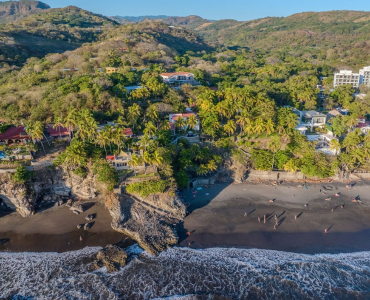
El Salvador’s Pacific coast is largely shaped by volcanic geology. Rocks produced by volcanic activity have been weathered and broken down over time, carried toward the coast by rivers and rainfall, and continually sorted by the waves. The result is the dark volcanic sand that gives beaches like El Zonte their distinctive character.
And volcanic sand is more interesting than its color suggests.
What Makes Volcanic Sand Different?
Volcanic rocks can contain iron-bearing minerals such as magnetite and titanomagnetite, both of which have magnetic properties. In volcanic beach environments around the world, these heavier minerals can become concentrated as waves and currents sort the sediment, sometimes creating remarkably dark stretches of sand.
This is well-established geology. Magnetic minerals are routinely studied by geologists because they can preserve information about volcanic rocks and even record aspects of the Earth’s magnetic field at the time those rocks formed.
We don’t have a detailed mineralogical analysis of El Zonte’s beach sand, so it would be premature to say exactly how much magnetite or titanomagnetite is present here. But its volcanic origin makes the question a fascinating one: what happens when we put our bare feet directly onto this ancient geological material?
That leads us to grounding.
The Science of Grounding
Grounding, or earthing, simply means making direct physical contact with the Earth’s surface. Walking barefoot on sand is one of the most natural examples.
The scientific theory is based on the Earth’s electrical potential and the body’s own electrical activity. Our nervous system, muscles and cardiovascular system all depend on electrical processes, and researchers have investigated whether direct contact with the Earth’s surface can influence measurable aspects of human physiology.
There is now a body of peer-reviewed research exploring the subject.
An early 2004 pilot study involving 12 participants reported changes in cortisol patterns along with improvements in sleep, pain and stress after grounding during sleep. Subsequent studies have investigated possible effects on inflammation, blood viscosity, cardiovascular measures, pain and quality of life.
The findings have attracted physicians and researchers who believe the subject deserves considerably more attention. Cardiologist Stephen T. Sinatra and colleagues have published reviews proposing possible anti-inflammatory and antioxidant effects, while physician Laura Koniver has written about the practical applications of grounding and its potential physiological effects.
The research is still developing, but the underlying question is a serious one: does direct contact with the Earth produce measurable changes in the human body?
Where Magnetism Enters the Conversation
Magnetism adds another fascinating layer.
The Earth has a magnetic field, and volcanic rocks can contain minerals that respond strongly to magnetic fields. In geology, those properties are measurable and useful. They help scientists understand volcanic formations, sediment movement and the history of Earth’s magnetic field.
But the magnetic properties of volcanic minerals and the proposed effects of grounding are two different pieces of the puzzle.
Grounding research is primarily concerned with electrical contact between the body and the Earth’s surface. The presence of magnetite in volcanic sand does not, by itself, demonstrate a health benefit. What it does tell us is that the physical environment beneath our feet is far more complex than it appears.
And that makes a place like El Zonte particularly interesting.
Why Some Researchers Believe Grounding Matters
Several researchers have proposed mechanisms through which contact with the Earth could influence biological processes.
Some grounding studies have reported changes in cortisol and sleep patterns. Others have looked at inflammation, blood chemistry, pain and cardiovascular measures. Reviews by researchers including Sinatra and colleagues have suggested that the Earth’s electrons could play a role in regulating oxidative stress and inflammation.
Other physicians have approached the subject from a broader environmental perspective. Dr. Jack Kruse, for example, has written extensively about the interaction between human biology and the natural environment, including natural light and the Earth’s electromagnetic environment. His work extends into areas that remain outside established clinical science, but it forms part of a wider conversation about how modern life may have changed our relationship with the natural world.
The important point is that grounding is being investigated from several different angles. There are interesting physiological findings, proposed mechanisms and plenty of questions still worth answering.
What Does That Mean for a Day at the Beach?
You don’t need to settle the scientific debate to appreciate what happens when you spend time barefoot on El Zonte’s beach.
You’re outside in natural light. You’re walking rather than sitting at a desk. You’re looking at the ocean. You’re listening to waves. You may be swimming or surfing. Your attention naturally moves away from screens and schedules and toward the physical environment around you.
Those things are meaningful in their own right.
There is also something different about the physical sensation of walking barefoot. The sand is warm, then cool near the water. It shifts beneath your feet. The Pacific moves in and out around your ankles. You’re not simply looking at the landscape; you’re physically connected to it.
Whether some of that experience is explained by grounding, by time spent outdoors, by movement and natural light, or simply by getting away from everyday demands, the experience can be deeply restorative.
A Morning on El Zonte’s Black Sand
At Villa Lety, you don’t have to plan an excursion to experience it.
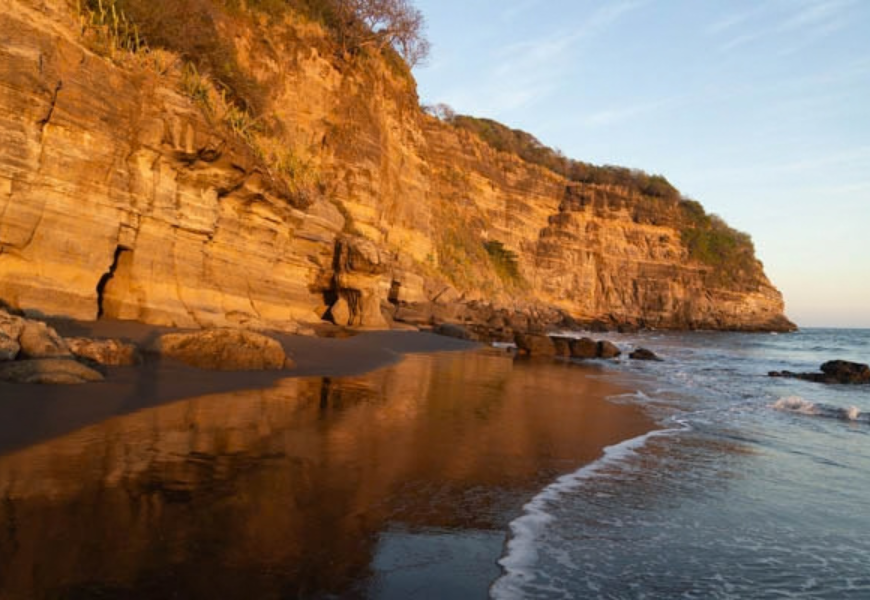
During the months when the sunrise is particularly beautiful, roughly September through April, the beach can be remarkably quiet in the early morning. If the tide allows, you can walk directly along the shoreline as the sky changes from dark to red and orange.
Take off your shoes and walk for a while.
You can think about the geology if you’re curious. You can think about grounding if that’s your interest. Or you can simply watch the ocean and enjoy having the beach almost to yourself.
That’s perhaps the nicest thing about this whole subject: you don’t need special equipment or a complicated routine. The simplest version of the experience has been available for as long as people have been walking barefoot outdoors.
So, Is El Zonte’s Black Sand Healing?
There is enough science here to make the question worth asking.
We know that El Zonte’s sand comes from a volcanic landscape. We know volcanic rocks can contain magnetic minerals such as magnetite and titanomagnetite. We know the Earth has a natural electrical and magnetic environment, and we know researchers have been studying whether direct contact with the Earth’s surface produces measurable physiological effects.
Several studies have reported promising findings, and some physicians and researchers believe grounding may eventually prove to have meaningful applications in health and wellness.
At the same time, the research is still developing, and grounding should not be presented as a proven treatment for medical conditions. We also don’t yet have the local mineralogical research needed to say that El Zonte’s sand has some uniquely powerful magnetic or therapeutic property.
Perhaps that’s what makes the subject so interesting.
A simple walk along a black-sand beach connects you to something much older than the resort, the surf town or even the road that brought you here. Beneath your feet is volcanic material shaped by the geological history of El Salvador, the movement of the Pacific and the constant interaction between land, water and weather.
You can simply enjoy the beach.
Or, if you’re curious, you can wonder what else might be happening beneath your feet.